Zane Sky
Hi welcome to my portfolio site!I'm a driven and passionate developer who works on projects full of heart and soul.My roots as a developer are with 2D and 3D Character Art but in seeking answers to achieve the styles and projects I find most appealing I’ve picked up many other skills within game development and have become a well rounded generalist.Some of my skills include:
3D Character Art, 3d Art, Technical Art, Concept Art, Graphic Design, Game Design, and Level Design
Projects
Art Portolios
RuneBow
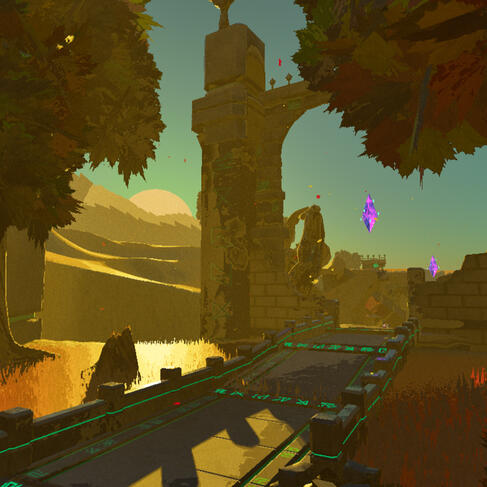
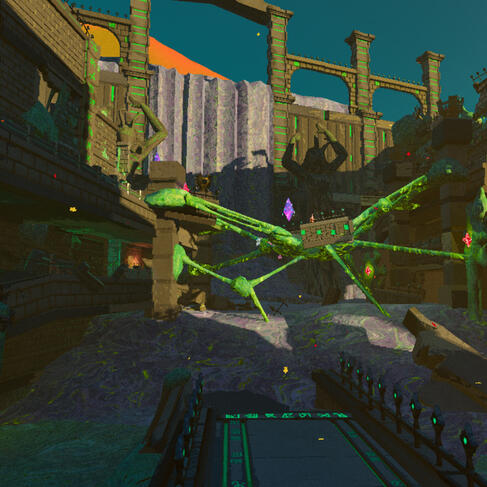
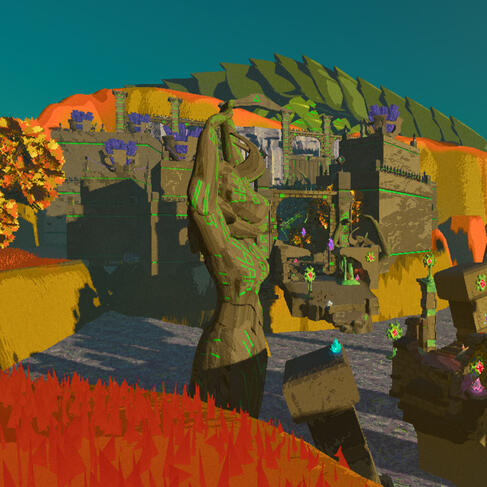
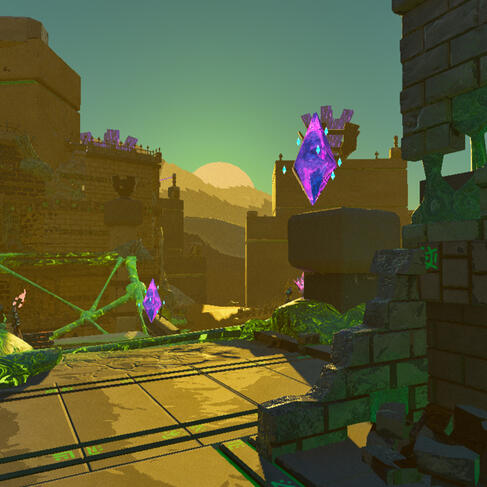
RuneBow is an on the rails shooter made over 3 months with a team of 13. My role on RuneBow was Co-Lead alongside Level Designer, Game Designer, Encounter Design, and Tech Artist.
Hi there!This section of the website is still a work in progress. It lacks images, general polish, contain a few writing hickups.But if you find these type of break downs interesting, I wanted to leave it accessible so you can see a glimpse of what I contributed to this project and my thought process though it all.If you do read, I hope you enjoy :>
Game Design
Hunter vs Hunted
Runebow's game design focuses on player discovery and playing on the Hunted/Hunter mindset. I found the hunted to hunter progression in the game Rollerdrome fascinating and how they achieved this through out multiple systems and design choices in their game.My design work on Runebow takes a lot of inspiration from that game as well as other information based games. Where everything is handed to you from the start but you must experiment and be curious to truly understand how to play optimally.As you become more accustomed to how the various mechanics like health, enemy behaviors, and runes work you will take your playtimes from 10-15 mins down to 4 mins turning the game more into a score based/speed running game.
Bow Draw Mechanics
The Draw system was inspired by a similar draw system found in The Pathless, but with a few important changes. Both feature a charge time for your shot, however in The Pathless your arrow will only hit your target if you release at the halfway "Quick Draw" point or at the fully charged "Full Draw" point. The Pathless also will have your shots auto aim letting you focus more on moving and avoiding taking damage.Hitting targets in The Pathless will give you more stamina for running in the game, although if you hit targets at the "Quick Draw" mark you will get a burst of speed and more stamina was a reward but risk missing your shot.Image showing RB and Pathless draw systemsIn RuneBow, our draw system functions where if you let go anywhere outside of these points you will still fire an arrow to honor the players aim at all times. However the damage values will change depending if it's a "Standard Draw", "Quick Draw", or "Full Draw".
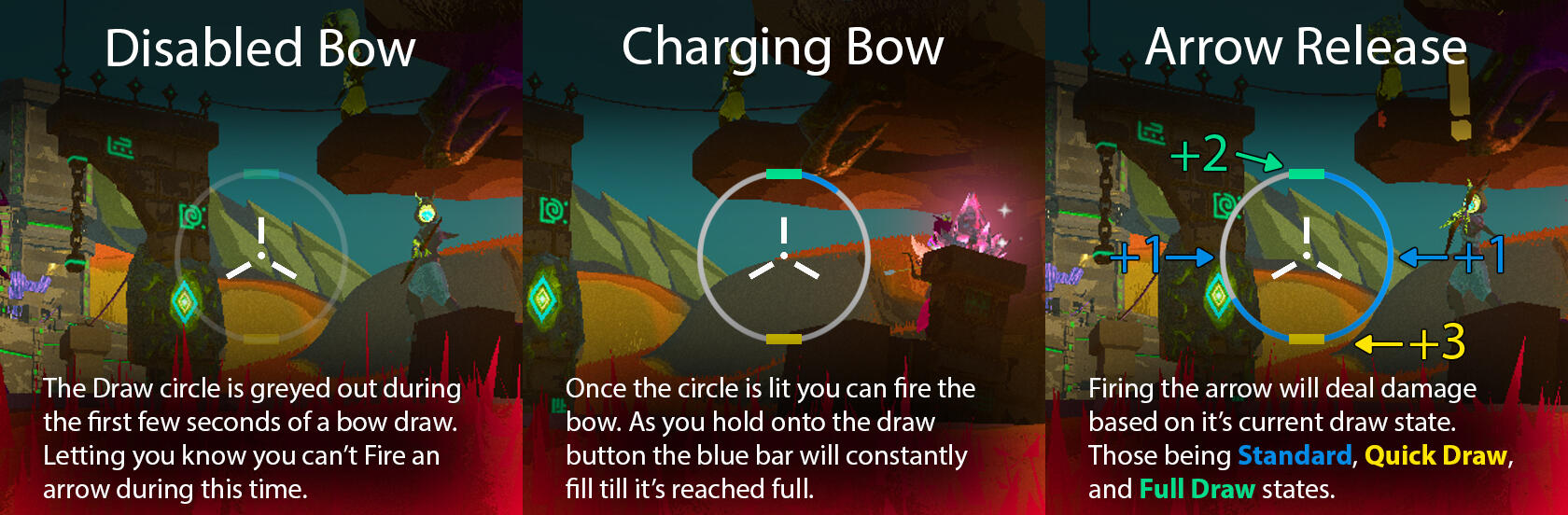
Given all standard enemies have 3 health and flying enemies have 1 health, hitting any enemy with a "Quickdraw" will always kill them instantly regardless of where you hit them on their body."Full Draws" can also one shot kill enemies, but you need to land your arrow on the enemy's head which will deal an additional point of damage.These choices keeps Runebow's time to kill very low, making encounters fast if you know what you are doing and have good aim. While missing the timing window for "Quick Draw" is a very punishing experience but inversely making landing "Quick Draw" feel very rewarding when everything lines up.All this was in aim to replicate the feel of arcade games such as Time Crisis and The Walking Dead.
Arrow Parry
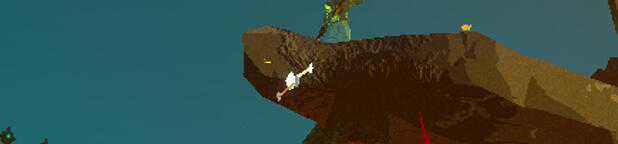
The Arrow Parry was a happy accident during development. Originally a result of a bug but I saw potential in it for skill expression and requested to keep it in as a feature.This paid off immediately once we properly implemented the Chrono rune, as one rules is that it’s slow down effect will stay applied until you manually drop out of via button press or by returning to cover.So, if a player skilled enough, they can keep Chrono up for an entire fight via dispatching the right enemies and parrying their projectiles.
Enemies
ArchersThe enemy archer is the main enemy found within RuneBow. They range from the easier enemy to tackle but can have their settings tweaked to push more pressure onto the player to keep things interesting long term.Archers mirror the players behavior where they will hide in cover and must pop out of cover to take a shot at the player.Archers will check at a set variable of time while in cover to do something according to a tokenized weight system for RNG.
These actions are:
1) pop out and shoot at a set time variable
2) pop out and taunt
3) Do nothing and remain in coverThe archers will always hit the player if they are out of cover when the archer shoots, giving the player only a little bit of time to react with either moving back into cover or taking aim at their arrow and parrying it.When archers taunt they will show a bit of personality but also give themselves a buff to their next shot.Discuss Differences between the 3 colors of archers.
Late in development I had went in and cleaned up the archer’s blueprintEasy | (Blue)
RuneBow lacks a proper tutorial for the player and thus this is largely handled by giving the player easier enemies and a few easier fights with more generous checkpointing early on to get them accustomed to it’s logic and tools.The easy archers fulfill this role by being dense in the first 4-5 fights. But then lighten up in appearance and shift to be only used as something to shoot and take stress off the players cognitive load.Behaviors of Easy Archers:
- Rare to quick draw their arrows make them not much of a threat while out of cover.
- Common to long draw arrows making them easier to shoot
- Very rare to Taunt and can taunt multiple times back to back
- Common to be simi exposed while in cover (level designer consideration)Standard | (Green)
Green Archers are the standard archer varrient you will encounter in RuneBow, they are largely found at the end of the first section of the level and fill the middle end to end sections.These Enemies are generally speaking a happy medium of theBehaviors of Standard Archers:
- Rare to quick draw but slightly more likely than easy archers
- Common to long draw arrows
- Common to taunt the player and will always quick draw after taunting putting more pressure and threat onto the playerWhite (Elite)Behaviors of Elite Archers:
- Reduced duration for most actions to make the player feel uncomfortable and force them to learn new timings with the elite enemies thus making them more unforgiving to the player.
- Common to quick draw to put more pressure on the player and quickly make their threat known to the player
- Very Rare to long draw arrows
- Common to taunt the player and will always quick draw after taunting putting more pressure and threat onto the playerFlierBrute
While we only had two enemies ultimately show up in the final game we did plan and develop a 3rd enemy to act as a more mini-boss style encounter. This enemy would have had you shoot certain spots on it to deal damage, any other spot would have resulted no damage delt. Meaning the player must use precision or clever use of the Explosion Rune to take out the brutes.While fun in concept he was the last enemy to see implementation, and this was taking longer than we had hoped, leaving me to have to push for him to be cut so we could focus our resources in the final few weeks towards polishing the other enemies and making them more fun to encounter in fights
Tech Art
Stylized Post Process Shader
For Runebow we had 3 months to make a game that was both fun but also was worthy candidate for everyone's portfolio.I wanted to make sure the art team also had a chance to create and present portfolio worthy work as well so I pushed for a more stylized art direction for our game.Image of shader on and offA lot of the work was on them for this but additionally I made an active effort to implement a stylized post-process shader that would help to unify style discrepancies in their work, acting as the glue that held the visual style together.Image of noise on and offAdditionally a late but important addition to the shader was the addition of noise, this helped define the games style further by giving a more cinematic quality as well as have gameplay benefits to readability of the enemies as they don't receive any noise.
Chrono Shader
Image/video/gif of Chrono rune being usedI knew the chrono rune would benefit from a very distinct visual effect upon activation to help convey both how impactful it is and make sure the player knows time is being slowed down.image of stencil bufferTo achieve this, I had made use of the stencil buffer to have all objects that are considered intractable with an arrow to render in color while everything else becomes grayscale and gets a bit darker.image comparing with and without noiseDoing this also allowed me to add noise into the environment while keeping characters and interactables without noise, which subtly helps the enemies and interactables stick out from the environment so players can quickly target enemies better alongside other subtle visual reinforcements.Another small but big win was the SFX I had created while implementing the chrono visual effect. This ended up being the cherry on top.
Grass Generation
When I found out our games pitch was fantasy Time Crisis, I knew to help set Runebow apart from Time Crisis we would want to feature lush fields of grass. To do this however would be horribly unperformant if we had used anything unreal had by default. Thus a more handcrafted solution was required.I had achieved a highly performant grass generator through researching solutions others had found online plus cross referencing that with my past research into performant grass for other engines such as unity.Ultimately what resulted was something the art team could learn and use. Although if I had more time I would have made an effort to make the generator more useable for the artist by adding a generation field preview, test generation button, and have the generator run though each chunk automatically by hitting 1 button.Also, I would have loved to have worked a bit more on making the grass look even better. Small things such as blades of grass inherrenting the surface normals of their generation location, wind highlights, more unique grass blade shapes, ect.
Mythren
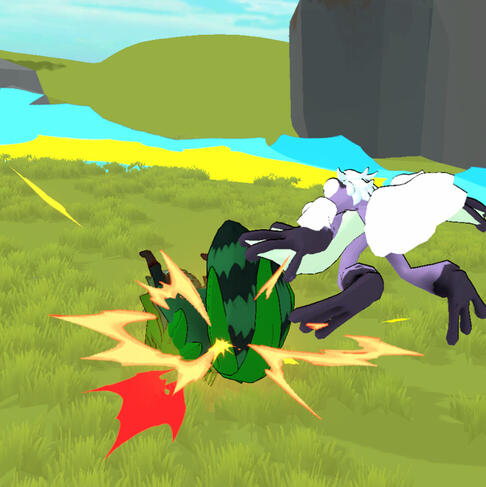
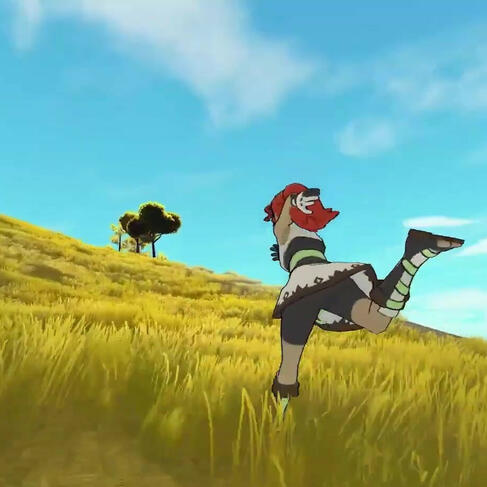
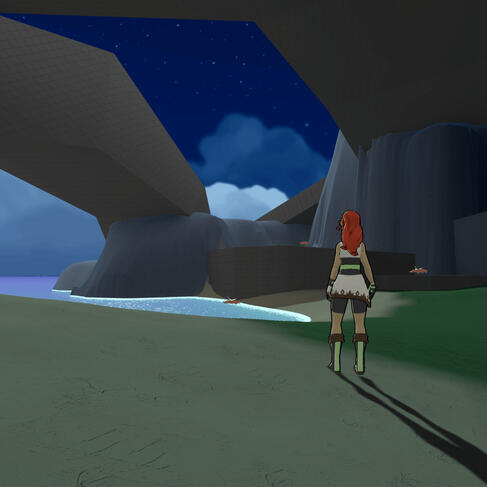
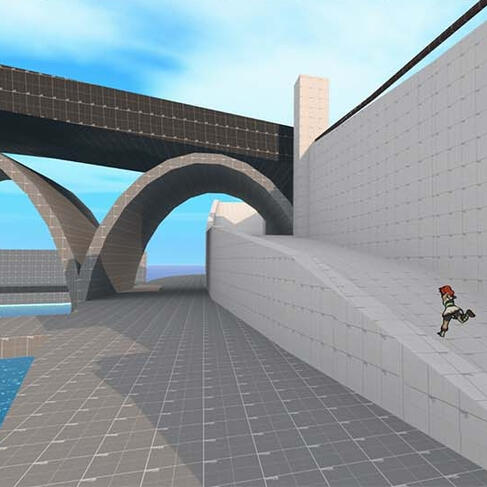
Mythren is a monster taming action RPG I had worked on with 9 others with the goal of making a Pokémon game that focused more building strong bonds with your creatures and bringing a realtime combat to genre.I contributed to the project with character art, single player game design, level design, and 3D art direction.
AfterLight
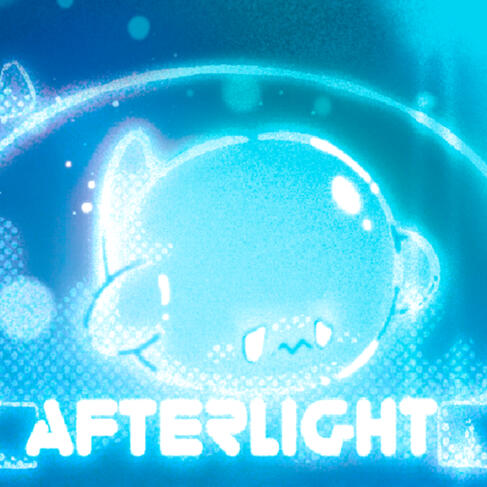
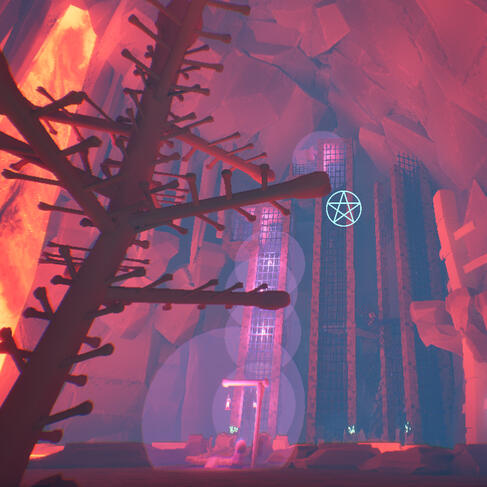
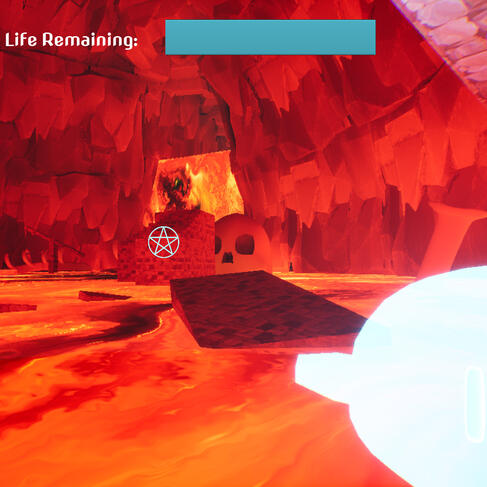
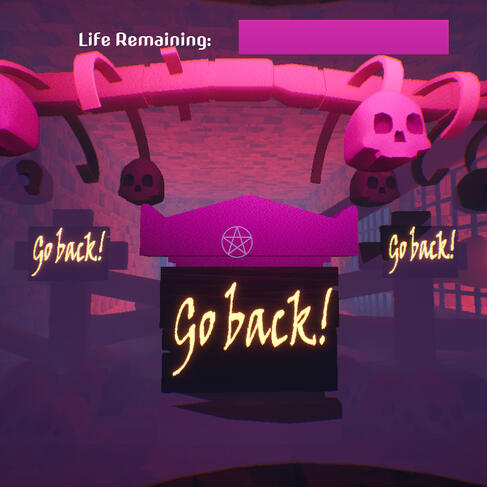
AfterLight is an game jam game started by fellow students for the AIE 2024 HolidayJam. Where you find yourself trapped in the dark catacombs with a bright ghostly friend! Stay within their light or the darkness will kill you.I had joined the project at the start of 2025 for our Funification project. This projects goal was to take the 48 hour jam game and make it more fun over the course of 3 weeks!I contributed to this effort by exploring level design, bringing more mechanical consistency with the light mechanics, Tweaking the UI/UX, and changing how the player interacts with the ghost in the first person view.
Level Design
For AfterLight we found that the levels where pretty rough and difficult to make it through in a way that didn’t match it’s central character Terry the ghost.All of the designers on this project tackled a new level idea. Mine focused on story telling and puzzle solving. Having you and your companion get separated briefly to solve simple puzzles to move forward. Which leads to a final section where you are separated from the companion for an extended time. Both you and the companion need to help each other from afar to meet back up again and end the level.While my test level didn't make it into the final build it did however make plenty of discoveries that then propagated into the new levels the other designers had worked on.
Such as the magic circles found on surfaces to help influence the player to aim their throws in the correct location before they throw the ghost.Separating the player and the companion from each other for extended periods of time.Larger imposing spaces and more selective lighting to help guide the player more intuitively.
Light Mechanics
In the jam version of the game the only light that would heal you and keep you safe was the light emitted by the companion. While fun it largely limited what was possible with level design and I had suggested to have all lights found in a level to function as safe spaces much like the ghost to enable a bigger possibility space for level and mechanical design in the game.I had decided to take up talking this problem and achieved it by making any clear light source such as a torch heal you while anything else darkness take damage away from you. I also gave all light sources a clear purple bubble that indicates to the player the moment they will be safe from the darkness. Additionally I set an ideal light size for most sources of light.Collisions were set to favor the player a bit more than the visual indicated, giving the player a more perceived "I just barely made it" moments.I had set up the torch blueprints to dynamically update and clamp the light based on the bounds of the bubble to remove visual and hit box discrepancies and make it easy for other designers to edit and keep visually consistency with other light sources.Ideally if we had VFX/Artist support I would have also pushed to have the bubble be less visually distracting while being readable on the ground via more subtle coloring and a shader that makes the bubble more visible where the mesh collides with other surfaces.
Ghost Companion
For updates to the ghost companion, I got it so he is properly equipped to the players "hand" in the FPS view while holding them. They will also properly rotate while looking around. Also added simple eyes to the model so he gives off a bit more personality while you hold him.I also worked closely with the programmer to help debug and cleanup both the companion and player blueprint code from the jam version. Making it easier to work with and add and remove features to both characters.For debugging we focused on making sure the ghost would act predictably when grabbed, thrown, and when they hit the ground.
UI/UX
For the UI my efforts where towards improving the HUD to better communicate to the player when they are losing/gaining health, are in or out of light, and tidy up front choices and placement of the health bar. Also going through and properly imputing VA and close caption subtitle information with all lines of dialog/sfx found in the game.
Wandering Forest
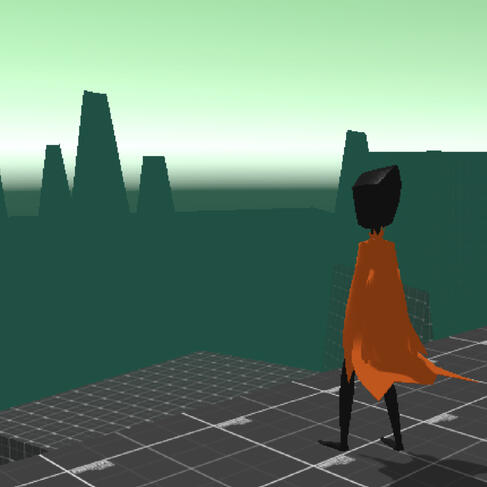
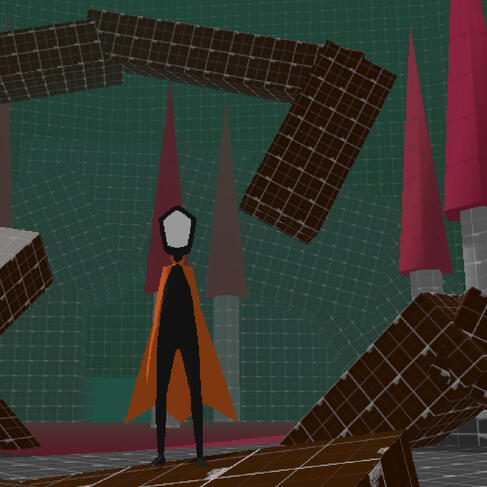
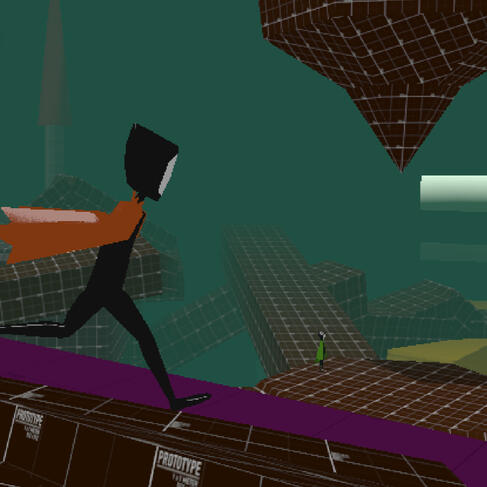
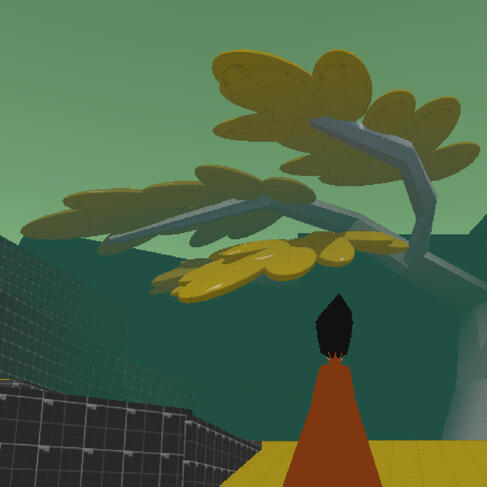
Wandering Forest was an experimental game jam game I had worked on with 2 others with the goal of making an moody narrative driven art game set during fall.The game's design has you wandering a forest with 4 areas focused around a different theme tied to autumn and the concept of loss.Those being Time, Change, Decay, and Harvest. It is your goal to help the guy in the hub area over come each of these concepts and let go of and move on from what he is currently troubled by, through talking to the people in each area who discuss each theme to the player.Unfortunately the project was never completed.
Bubble Bots
Bubble Bots is a chain reaction puzzle game where you must pop all the bubbles in a level. Bubble Bots was made over the course of a week, with a bulk of development being done on the final 3 days.I contributed the Character Art, Game Design, and Level Design of the final level in the game.
Disorient Express


Disorient Express is a 4 player co-op friend slop game where you need to find your way to the center karaoke car but the train cars randomly shuffle every time you move trains.This was a game me and 4 fellow Seattle Indie community members worked on over a 4 day internal jam.I contributed the Concept Art and 3D Environment art.Add link to itch as well :O